Oratory, revolution, and the rights of the states
Patrick Henry
1736–1799 · United States
Henry was born in Hanover County, Virginia, in 1736, failed at farming and storekeeping, and taught himself law well enough to be admitted to the bar. His gift for speaking became clear in the Parsons' Cause of 1763, when his argument against the royal prerogative made him famous overnight.
Elected to the House of Burgesses in 1765, he introduced the Virginia Resolves against the Stamp Act and carried them with a speech so bold that some members cried treason. In 1775 he told the Virginia Convention that he knew not what course others might take but that as for him, give him liberty or give him death, and the colony was soon at war.
He served as Virginia's first governor and refused to attend the Constitutional Convention, fearing that the new frame of government would swallow the states and the liberties it was meant to protect. His opposition helped produce the demand for a bill of rights. He died at Red Hill in 1799.
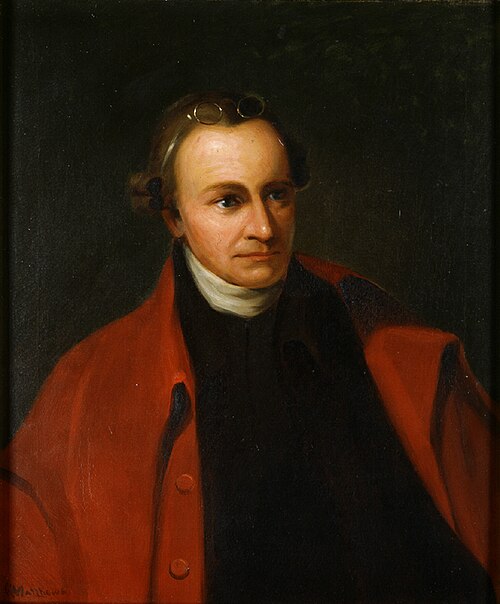
George Bagby Matthews (1857 - 1943), after Thomas Sully (1783-1872) · Public domain
Known for
Give me liberty
Henry's speech to the Virginia Convention of 1775 and the oratory that made him the voice of the coming revolution.
By March 1775 the Virginia Convention was divided between those who still hoped for reconciliation and those ready for war. Henry offered resolutions to put the colony in a posture of defense, and when they were opposed as premature he rose to answer.
The speech as it survives was reconstructed years later by Henry himself and by hearers, so its exact words are uncertain. But its closing appeal — give me liberty, or give me death — became the most famous line of the American Revolution, and the convention adopted the resolutions.
Anti-federalism
The opposition to ratifying the Constitution, which feared a distant government would swallow the states and the liberties won in the Revolution.
Henry refused to attend the Constitutional Convention and fought ratification in the Virginia ratifying convention of 1788. He objected that the document began 'We the People' rather than with the states, that it created a consolidated government, and that it lacked a bill of rights.
He lost by a narrow margin, and Virginia ratified, but his arguments helped produce the amendments that became the Bill of Rights. The anti-federalists were not simply reactionaries; they warned about concentrated power and distant government, and their concerns became a permanent strand in American politics.
Hosted
The orator's opposition · 1788 · Richmond, Virginia
Attended
The evening before independence · 1776 · Philadelphia, Pennsylvania
The pamphleteer's table · 1776 · Philadelphia, Pennsylvania