Revolutionary pamphleteering
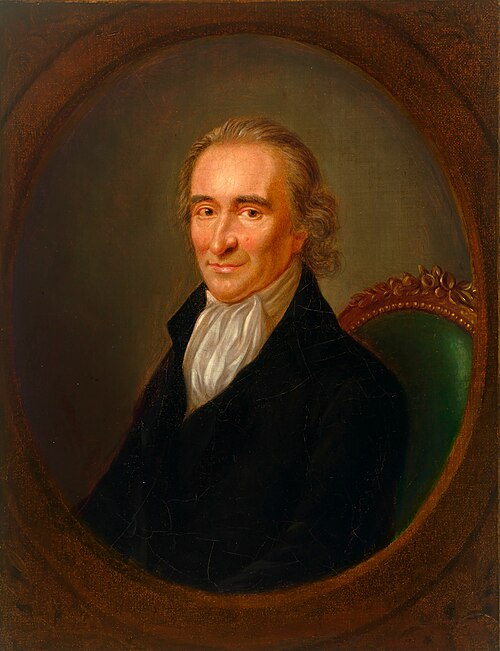
Thomas Paine
1737–1809 · United States
Paine was born in Thetford, England, in 1737 and worked at a series of trades, including stay-making and excise collecting, before Franklin encouraged him to emigrate to America in 1774. He arrived in Philadelphia and took up journalism on the eve of the Revolution.
Common Sense, published in January 1776, argued in plain language that monarchy was absurd and that the colonies should be free and republican; it sold in enormous numbers and helped turn independence from a radical position into a popular one. During the war he wrote the American Crisis papers, whose opening line about the times that try men's souls was read to the army.
He returned to Europe and wrote Rights of Man in defense of the French Revolution, then The Age of Reason, an attack on organized religion that cost him most of his American friends. He died in New York in 1809, poor and widely reviled, though his arguments had changed the political vocabulary of both hemispheres.
Laurent Dabos · Public domain
Known for
Common Sense
Paine's 1776 pamphlet, which argued in plain prose that monarchy is absurd and independence is the only honorable course.
Common Sense appeared in January 1776 and spoke to ordinary readers in a language they could follow. Paine attacked hereditary monarchy as an insult to reason, distinguished society from government, and argued that America had outgrown its connection to Britain.
The pamphlet sold in the tens of thousands and was read aloud in taverns and camps, turning independence from a dangerous idea into a popular cause. Jefferson said it did more than any other single piece of writing to prepare the American mind for the decision of July.
The Rights of Man
Paine's reply to Burke, defending the French Revolution and grounding government in the rights of each generation.
When Edmund Burke attacked the French Revolution, Paine answered with a defense of popular government and natural rights. He argued that rights belong to living people, that one generation cannot bind the next, and that hereditary rule is a form of usurpation.
The book was read across Europe and made Paine a hero to reformers and a traitor in the eyes of the British government, which tried him for sedition. It stands with Common Sense as the clearest statement of his belief that government should be judged by whether it serves the rights of its people.
The Age of Reason
Paine's attack on revealed religion, which made him a hero of freethinkers and cost him his American reputation.
Paine wrote The Age of Reason during the French Revolution, partly to defend the revolution against the charge of atheism and partly to state his own deism. He argued that reason, not revelation, is the proper basis of belief, and that the Bible is a human book full of contradictions.
He affirmed belief in a creator and in a future life but rejected churches, creeds, and the divinity of Christ. The book scandalized the American public, and Paine spent his last years isolated and poor. Its arguments became a touchstone for later freethinkers even as they ended his political influence.
Hosted
The pamphleteer's table · 1776 · Philadelphia, Pennsylvania